How to Become a Charter Yacht Captain
21 May 2026
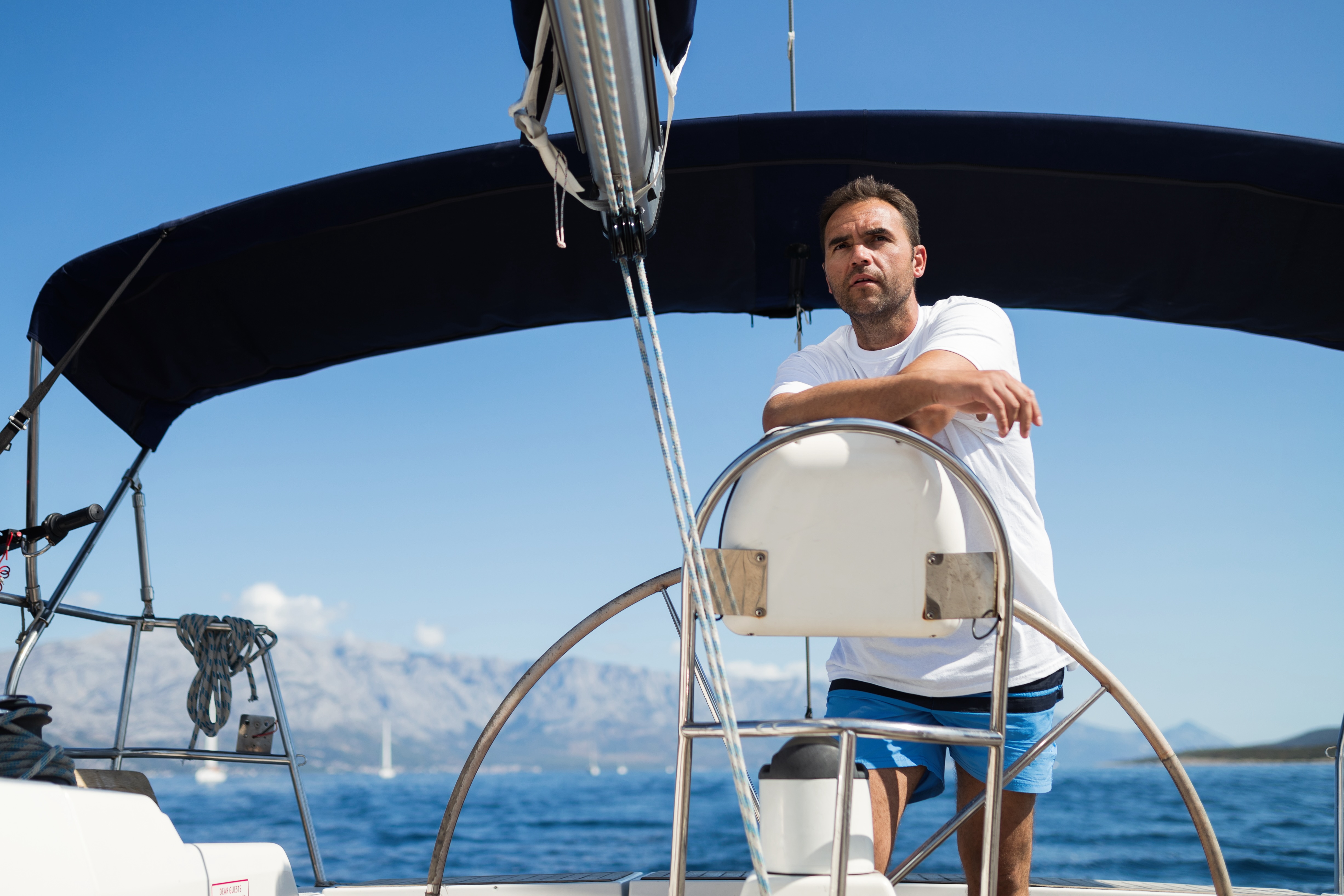
Charter yacht captaining is one of the most desirable professional sailing roles in the industry — and one of the most competitive. Whether you're eyeing a crewed sailing yacht in the Mediterranean, a bareboat fleet captain role in the Caribbean, or a privately-owned charter vessel on the UK coast, the pathway combines serious sailing credentials with commercial licensing, guest management, and a level of operational responsibility that separates professional captains from competent recreational sailors.
This guide focuses on sailing yachts in the 40–55 foot range — the most common size bracket for crewed and bareboat charter operations worldwide.
What Does a Charter Yacht Captain Do?
A charter yacht captain has command of the vessel and full responsibility for the safety of guests, crew, and the boat itself throughout a charter. On a 40–55 foot sailing yacht, you'll typically operate with a small crew of one or two, managing everything from pre-charter provisioning and safety briefings through to passage planning, anchoring in exposed bays, dealing with mechanical issues underway, and ensuring guests have the experience they paid for.
Charter captaining sits at the intersection of seamanship, hospitality, and operational management. The sailing is rarely the hardest part — managing guest expectations, maintaining the vessel to charter standard, and making sound decisions under commercial pressure are where the role is defined.
Step 1: Build a Serious Sailing Foundation
No charter company will put guests on a 50-foot yacht under the command of a skipper without a proven sailing track record. You need demonstrated competence across a range of conditions, vessel types, and passages — and a logbook that reflects it.
Experience to prioritise:
Passage-making as skipper on vessels 35 feet and above
Offshore and coastal passages logged in varied weather conditions
Night passages and multi-day passages as skipper or watch leader
Experience on both monohulls and catamarans — charter fleets increasingly include both
Mediterranean, Caribbean, or equivalent charter-destination sailing experience if possible
Time as crew or first mate on charter yachts — understanding the commercial context matters
Your logbook is your professional record. Keep it detailed, accurate, and complete from the start of your sailing career. Charter operators and licensing authorities will scrutinise it.
Step 2: Obtain the Right Certifications
The certifications required to work as a charter captain depend on where you intend to operate and the size and type of charter. The two primary frameworks are RYA (UK and international) and the US Coast Guard (USCG) system for American waters — but both are relevant depending on your target market.
RYA Yachtmaster Offshore with Commercial Endorsement
The benchmark qualification for professional charter skippers in the UK, Europe, Mediterranean, Caribbean, and most international markets. The Commercial Endorsement is what makes the qualification legally valid for paid charter work — the standard Yachtmaster certificate alone is not sufficient for commercial operations.
Prerequisites for Yachtmaster Offshore:
2,500 logged sea miles within the last 10 years
50 days at sea
Five passages over 60nm including two overnight and two as skipper
Valid VHF SRC licence and first aid certificate
International Certificate of Competence (ICC)
Required for skippering vessels in most European countries. RYA Yachtmaster and Day Skipper holders can apply for the ICC directly through the RYA. Essential for charter work in Greece, Croatia, Turkey, Italy, and other Mediterranean destinations.
US Coast Guard (USCG) Captain's Licence
Required for operating any vessel carrying passengers for hire in US waters. For sailing yachts in the 40–55 foot range, the relevant licence is typically:
OUPV (Operator of Uninspected Passenger Vessels) / 6-pack licence — for vessels carrying up to 6 paying passengers; the most common entry point for charter sailing captains in the US
Master 50GT or Master 100GT — for larger commercial operations or vessels above certain thresholds
USCG licensing involves documented sea service (360 days for a 100GT Master, including 90 days on vessels over 100GT), a written examination, a physical, and a drug test. Allow several months for the application process.
ASA Certifications (US market)
For captains operating in ASA-affiliated charter fleets, particularly bareboat operations:
ASA 104 (Bareboat Cruising) — minimum standard for most bareboat charter companies
ASA 114 (Cruising Catamaran) — required for catamaran charter roles
ASA 106 (Advanced Coastal Cruising) — for offshore and passage-making charter roles
Additional Required Certifications
STCW Basic Safety Training — required by most commercial operators; covers personal survival, fire prevention, first aid, and personal safety. A 5-day course
VHF Short Range Certificate (SRC) — mandatory for all commercial skippers
ENG1 or ML5 Medical Certificate — required for Commercial Endorsement and most professional charter roles
First Aid / Offshore First Aid — RYA-approved first aid as a minimum; offshore first aid preferred for passage-making charter
Step 3: Accumulate the Required Sea Miles
Sea mile requirements vary by licence level and employer, but the direction is always the same — more is better, and the quality and variety of your miles matter as much as the quantity.
Mileage targets to work toward:
RYA Yachtmaster Offshore: 2,500 miles minimum; aim for 3,500–4,000+ before sitting the exam
USCG 100GT Master: 360 days sea service; 90 days on vessels 100GT or above
Charter company requirements: typically 1,000–5,000+ miles depending on operator and role level
Best ways to build miles efficiently:
Yacht delivery work — excellent for accumulating offshore passage miles quickly
Offshore racing (Fastnet, ARC, transatlantic races) — high-quality miles with genuine heavy-weather exposure
Sailing as crew or mate on charter yachts — builds commercial experience alongside sea time
Flotilla work — Mediterranean miles with client management experience built in
Private crew or paid captain positions on private yachts
Step 4: Gain Charter-Specific Experience
Sailing competence and commercial charter competence are related but distinct skill sets. Before captaining your own charter programme, time as crew, mate, or delivery skipper on charter vessels builds the context that makes you genuinely effective — and hirable.
What charter-specific experience teaches you:
Pre-charter vessel checks and handover processes
Provisioning, fuel management, and charter logistics
Guest safety briefings and managing varied ability levels aboard
Mechanical troubleshooting in charter-critical situations (engine failure, rigging problems, watermaker faults)
Marina check-ins, customs procedures, and local port authority requirements
The commercial reality of charter — damage deposits, incident reporting, operator expectations
Charter companies strongly prefer candidates who have worked in the industry in any capacity over equally-qualified sailors who haven't. A season as first mate or delivery crew on a charter yacht is worth more than equivalent sea miles from purely recreational sailing.
Step 5: Build Your Professional Network
Charter captaining roles are rarely filled through job boards alone — the industry is relationship-driven, and most positions are filled through direct contact or word of mouth. Building a professional network early pays long-term dividends.
How to build your network:
Work multiple seasons at the same company or base — repeated presence builds reputation and trust
Connect with charter fleet managers, base managers, and operations staff directly
Attend industry events: boat shows (Southampton, Düsseldorf, Fort Lauderdale, Cannes), sailing rallies, and ARC events
Join professional associations: RYA, Superyacht UK, MedSail, and national charter industry bodies
Maintain a professional presence on LinkedIn and industry-specific platforms
Build relationships with boat owners — many private charter operations are captained through direct owner referral
The charter industry is smaller than it looks. A reputation for reliability, professionalism, and looking after both guests and the boat travels quickly.
Browse charter captain jobs on BoatyJobs →
Step 6: Apply Strategically for Charter Captain Positions
When you're ready to apply, target your approach carefully. Blanket applications to every charter company are less effective than targeted outreach to operators whose fleet, programme, and market match your experience.
Major charter operators hiring captains:
The Moorings and Sunsail (global fleet; Greece, Croatia, Caribbean, Pacific)
Dream Yacht Charter (large global fleet; multiple regions)
Sailing Europe / Kiriacoulis (Greece and Mediterranean)
Navigare Yachting (multiple Mediterranean bases)
Independent crewed charter yacht owners (accessed through brokers and direct referral)
Your sailing CV should include:
All certifications with issue dates (RYA, USCG, STCW, ICC, VHF, first aid, medical)
Total logged sea miles with breakdown by role (skipper vs crew)
Specific offshore passages and notable voyages
Vessel types and size ranges sailed
Commercial experience: charter, flotilla, delivery, instructing
Guest/client-facing experience
Languages (significant advantage in Mediterranean markets)
References from examiners, fleet managers, or boat owners
Step 7: Prepare Thoroughly for Interviews
Charter company interviews are practical as much as conversational. Expect scenario-based questions designed to test your decision-making under pressure — not just your CV.
Common interview scenarios:
A guest is insisting on sailing in conditions you consider unsafe — what do you do?
You anchor overnight and wake to find the wind has shifted and you're dragging toward a lee shore — walk me through your response
Your engine fails on approach to a busy marina in a 20-knot crosswind — what's your plan?
A guest slips and sustains a head injury 30nm from the nearest port — what steps do you take?
Prepare specific answers grounded in real experience, not hypothetical responses. Companies want to hear how you've actually handled pressure situations, not how you think you would.
How Long Does It Take to Become a Charter Yacht Captain?
The timeline depends heavily on how actively you accumulate sea miles and certifications.
Route Typical timeline Intensive (delivery work, offshore racing, sailing holidays) 3–5 years Regular recreational sailing with structured progression 5–8 years Starting from scratch 6–10+ years
The regulatory minimums (2,500 miles for Yachtmaster Offshore; 360 sea days for USCG 100GT) set the floor, but most charter companies want evidence of experience well beyond these minimums before entrusting a commercial vessel to a new captain.
How Much Do Charter Yacht Captains Earn?
Earnings vary significantly by region, vessel type, and whether the role is owner-operated, company fleet, or independently contracted.
Entry-level / first season captain (company fleet): €2,000–€3,000/month + accommodation
Experienced charter captain (Mediterranean season): €2,500–€4,500/month
Crewed charter yacht captain (private owner): €3,500–€6,000+/month
Year-round captain (Mediterranean + Caribbean seasons): €40,000–€70,000+/year
Senior captain with extended programme: €60,000–€90,000+ annually at premium end
Captains who combine Mediterranean summer seasons with Caribbean winter programmes — or who transition into superyacht captain roles — access the upper end of these ranges over time.
Frequently Asked Questions
Do I need a USCG licence if I already have an RYA Yachtmaster? For operating in US waters on a vessel carrying paying passengers, yes — a USCG licence is a legal requirement regardless of other qualifications held. For operating outside US waters, the RYA Yachtmaster with Commercial Endorsement is typically sufficient, though always verify local flag state requirements for your specific operation.
Can I captain a charter yacht in Greece or Croatia without a Yachtmaster? The ICC (International Certificate of Competence) is the minimum legal requirement for skippering in most European waters. However, charter companies operating commercially require their captains to hold qualifications that satisfy their insurers — in practice, Coastal Skipper or Yachtmaster with Commercial Endorsement is expected for paid charter work. Day Skipper alone is generally insufficient for commercial captaining.
What's the difference between a bareboat and crewed charter captain role? A bareboat charter captain is typically employed by a fleet operator to deliver, reposition, maintain, or check out vessels to clients who then sail independently. A crewed charter captain sails with the guests throughout the charter, managing the full on-board experience. Crewed charter is more demanding from a hospitality perspective; bareboat fleet work is more operationally and technically focused.
Is catamaran experience essential? Increasingly, yes. The charter market has shifted significantly toward catamarans, particularly in the Mediterranean and Caribbean. Captains with strong catamaran experience and relevant certifications (RYA Multihull endorsement, ASA 114) are more employable than monohull-only sailors. If you haven't spent time on cats, prioritise gaining it.
Do charter captains need to speak multiple languages? It's a significant advantage, particularly in Mediterranean markets. French, German, Italian, and Greek are all valuable depending on the base. English is universal in the industry, but captains who can communicate with local port authorities, marineros, and guests in their own language command both better pay and better job offers.
Ready to Find a Charter Captain Role?
BoatyJobs lists charter captain vacancies across the Mediterranean, Caribbean, and global sailing destinations — from first-season fleet positions to senior crewed charter captain roles on privately-owned yachts.