How to Become a Charter Yacht Host or Chef
14 May 2026
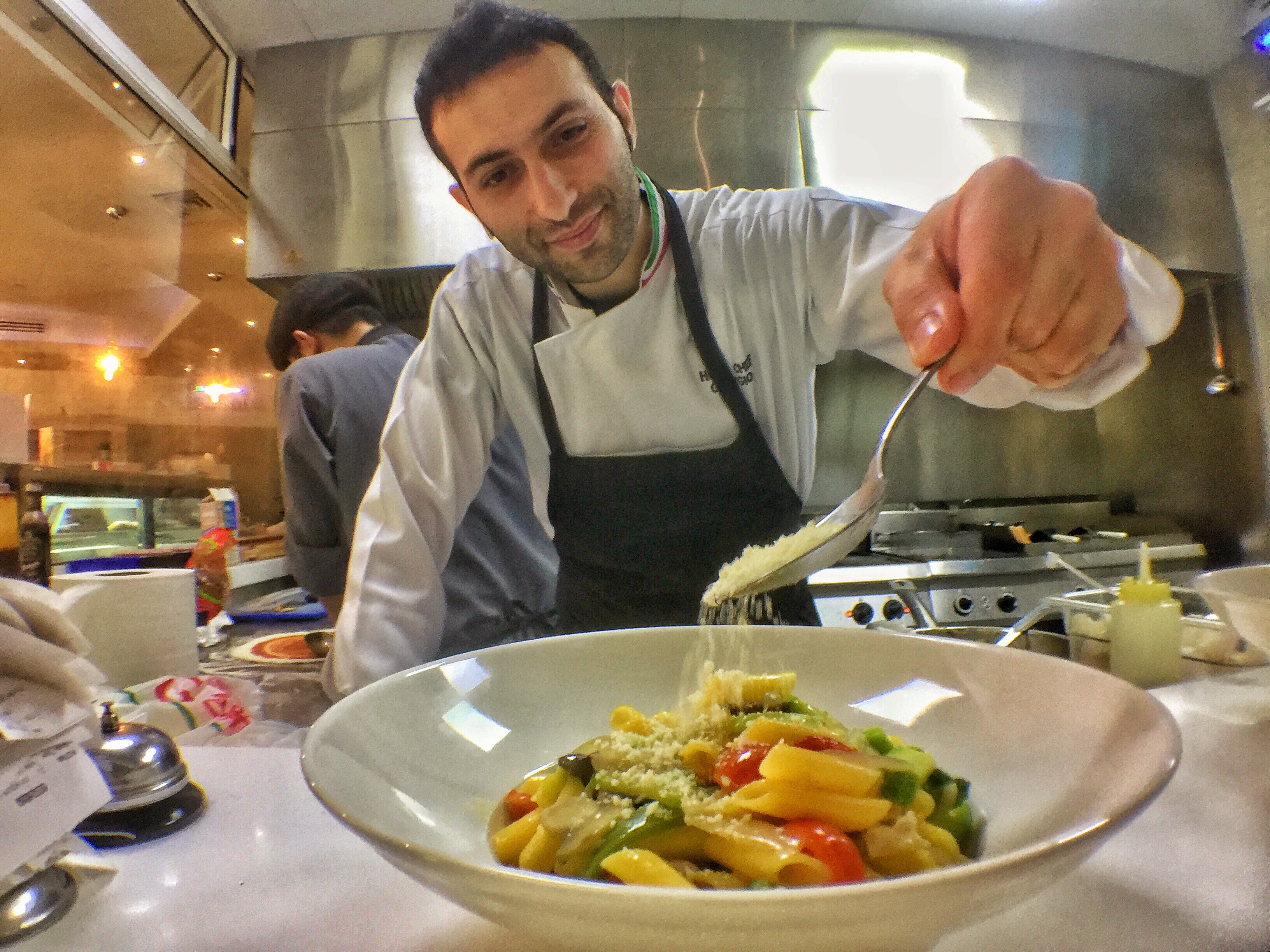
The charter host and chef role is one of the most sought-after positions in the sailing industry — and one of the least understood by people coming from land-based hospitality. Working as host or chef on a crewed sailing yacht between 40 and 55 feet means delivering a premium guest experience in a compact, moving kitchen with limited provisioning windows, no restaurant supplier deliveries, and guests who are often paying significant money for a week they've been planning for months.
Done well, it is a genuinely exceptional career. This guide covers exactly what it takes.
What Does a Charter Yacht Host or Chef Do?
On a crewed sailing yacht in the 40–55 foot range, the host/chef role is typically the second crew member alongside the captain. You are responsible for the entire guest-facing experience — from provisioning and meal preparation through to cabin service, guest liaison, and the day-to-day hospitality that defines the quality of the charter.
In practice, the role divides into three broad areas:
Galley and food: Planning menus before departure, provisioning for a week or more in a foreign market, preparing three meals a day plus snacks and sundowners for 4–8 guests in a galley the size of a campervan, managing dietary requirements, and maintaining food hygiene standards throughout.
Guest experience: Morning briefings on the day's plan, managing the social rhythm of the charter, setting up beach picnics and anchorage sundowners, organising restaurant bookings ashore, and ensuring guests feel genuinely looked after rather than simply fed and sailed.
Boat operations: Assisting the captain with lines, anchoring, and deck work; keeping the interior immaculate throughout the charter; managing linen, laundry, and cabin turnover; and maintaining the standards that charter guests expect from a professionally crewed vessel.
The role requires resilience, creativity, and genuine hospitality instinct. The galley conditions alone — heat, motion, limited equipment — will defeat people who've never cooked at sea before.
Step 1: Develop Strong Culinary Skills
Formal culinary training is not mandatory, but it creates a meaningful advantage — both in the quality of food you produce and in the credibility it lends your CV when applying to premium charter operators.
Culinary pathways into charter work:
Formal culinary qualification (City & Guilds, Le Cordon Bleu, national culinary institutes)
Professional kitchen experience — even a season in a busy restaurant kitchen teaches the speed, organisation, and pressure management that galley cooking demands
Yacht-specific cooking courses — several providers offer dedicated courses covering provisioning, galley management, and passage cooking at sea
Key galley skills to develop:
Menu planning for 7–14 days without resupply
Cooking in a small, moving kitchen with limited equipment
Managing multiple dietary requirements simultaneously (gluten-free, vegan, allergies)
Provisioning in foreign markets — finding equivalent ingredients, managing budgets, working with local suppliers
Batch cooking and food storage for offshore passages
Presentation at charter standard in a compact space
If you have no professional kitchen experience, it is worth working a season in a restaurant — even front of house — before pursuing charter work. The environment teaches you things that no course can replicate.
Step 2: Build Hospitality Experience
Charter guest expectations are high. A week on a crewed sailing yacht costs anywhere from €5,000 to €30,000+ and guests compare their experience against luxury hotels and high-end travel. The hospitality instincts required — anticipating needs, reading the room, managing difficult personalities with warmth and professionalism — come from real-world experience.
Relevant hospitality backgrounds:
Restaurant or hotel service — floor experience teaches you pace, guest management, and service standards
Event catering — useful for provisioning logistics and producing food at volume under pressure
Private household or private chef roles — closest analogue to the yacht environment; personal service for a small group of guests
Holiday rep or tour leader experience — overlaps with the social and coordination elements of the host role
Even a single season working in a busy Mediterranean restaurant or resort teaches you skills directly applicable to charter work. Many successful charter hosts/chefs come from land hospitality backgrounds and learn the maritime side on the job.
Step 3: Learn the Basics of Sailing and Yacht Operations
You do not need to be a sailor to work as a charter host/chef. You do need to be comfortable on a yacht, useful on deck, and functional in a seaway. A captain who has to manage a seasick, incapacitated host/chef is a captain in a very difficult position.
What you need:
Comfort on the water — if you've never spent time on a sailing yacht, do so before applying for any position
Basic deck skills: handling lines, coiling, fending off, and assisting with anchoring
Understanding of basic safety equipment locations and procedures
Awareness of when to stay below, when to clip on, and how to move safely on a heeling yacht
Seasickness management — know how your body responds to motion at sea and have a management strategy
Useful qualifications:
RYA Day Skipper theory — gives you navigational context and seamanship awareness without the full practical commitment
RYA Competent Crew — the practical entry-level sailing course; a week aboard, learning to be a functional crew member
ASA 101 / ASA 103 (Basic Keelboat Sailing) — the US equivalent for anyone targeting American or Caribbean markets
None of these are required, but they significantly improve your usefulness aboard and your attractiveness to charter operators who want a host/chef who is an asset on deck, not a liability.
Step 4: Obtain the Required Certifications
Charter yachts operating commercially have legal crewing requirements. The certifications below are mandatory or near-mandatory for any paid crewing role on a commercial charter vessel.
STCW Basic Safety Training
The foundation commercial maritime safety qualification. Covers personal survival techniques, fire prevention and fire fighting, elementary first aid, and personal safety and social responsibilities. A 5-day course available through maritime training centres worldwide. Required by virtually all charter operators and legally mandated for crew on many commercial vessels.
Food Safety / Food Hygiene Certificate
Required for anyone preparing food commercially. In the UK, the Level 2 Award in Food Safety is the standard minimum. Equivalent qualifications are accepted internationally. A one-day course — no reason not to have this before applying for any host/chef role.
VHF Short Range Certificate (SRC)
Not always mandatory for host/chef roles, but strongly valued. Allows you to operate marine VHF radio independently — important in any situation where the captain needs crew to manage communications.
First Aid Certificate
RYA-approved first aid as a minimum. An offshore or maritime first aid qualification is preferred by most operators and required for some.
ENG1 Medical Certificate
Required for commercial crew on many vessels. A straightforward medical assessment conducted by an MCA-approved doctor. Confirms you are fit for sea service.
Step 5: Get Your First Yacht Experience
No charter operator will hire an untested host/chef for a paying charter programme without some evidence that you can function on a yacht. The fastest route is to get yourself aboard in any capacity before you apply for paid roles.
Ways to get initial yacht experience:
Day sailing and weekend trips with sailing clubs or friends who sail
Volunteering as unpaid crew on deliveries or passages — widely available through sailing networks and delivery crew websites
Joining a sailing holiday as a paying guest to understand the charter environment from the client side
Completing an RYA Competent Crew course (5 days aboard)
Taking a position as a paid trainee or unpaid host assistant for a first charter season
The yacht crew industry has a well-established tradition of taking on motivated candidates with strong land-based hospitality skills and teaching them the maritime side — but you need to demonstrate basic sea legs and genuine enthusiasm for the environment before operators will invest in you.
Step 6: Build Your Network and Find Positions
Charter host/chef positions are relationship-driven. Most are filled through direct referral, crew agencies, and industry contacts rather than through public job boards.
How to access the charter crew job market:
Register with specialist yacht crew agencies: YachtCrew.com, Quay Crew, Faststream Maritime, Viking Recruitment, EYOS Expeditions
Create a profile on CrewFinders, The Triton, and similar industry platforms
Attend crew networking events in major charter hubs: Palma de Mallorca, Antibes, Fort Lauderdale, Tortola
Connect with charter base managers directly — particularly at companies operating 40–55 foot crewed fleets
Use LinkedIn to connect with charter industry professionals and fleet managers
Join online sailing and yachting communities where crew opportunities are shared informally
Browse charter host and chef jobs on BoatyJobs →
Major charter operators employing host/chef crew include The Moorings, Sunsail, Dream Yacht Charter, and a wide range of privately-owned crewed charter yachts accessed through brokers such as Burgess, Fraser, and Camper & Nicholsons.
Step 7: Build Your Charter CV and Portfolio
A strong charter CV for a host/chef role looks different from a standard hospitality CV. Operators want to see specific evidence of sea time, relevant certifications, and culinary range — not just employment history.
Your CV should include:
Certifications: STCW, food hygiene, first aid, VHF SRC, ENG1, any sailing qualifications
Sea time: logged days or passages aboard yachts, however accumulated
Culinary background: training, professional kitchen experience, any yacht-specific cooking experience
Menu samples: a well-presented sample menu appropriate for a 7-day Mediterranean charter demonstrates culinary range and provisioning awareness
Hospitality experience: relevant roles showing guest management and service standards
Languages: a significant advantage in the Mediterranean market; French, Italian, German, or Spanish all add value
References: from previous employers in hospitality or from yacht captains or owners you've sailed with
A photo portfolio of plated dishes from your cooking is also worth including — charter brokers and boat owners often review this as part of the hiring process for crewed yacht positions.
Step 8: Prepare for Interviews
Charter host/chef interviews combine culinary assessment with a practical evaluation of whether you'll be an effective and pleasant crew member in a confined space for extended periods.
Common interview topics and scenarios:
Walk me through your provisioning process for a 7-day Mediterranean charter for 6 guests
Two guests have severe nut allergies, one is vegan, and one is gluten intolerant — how do you plan the week's menus?
The captain tells you conditions tomorrow will require an offshore passage — how does that affect your galley preparation?
A guest is unhappy with their cabin — how do you handle it?
You're in a remote anchorage and realise you've run low on a key ingredient for tonight's dinner — what do you do?
Prepare specific answers with real examples where possible. Operators want to see that you think practically and stay calm under pressure — in a galley, in a seaway, with demanding guests.
How Long Does It Take to Break Into Charter Hosting or Cheffing?
The timeline depends on your starting point.
Background Typical timeline to first paid role Professional chef with STCW and some sea time 3–6 months Hospitality professional, no sea time 6–12 months No culinary or maritime background 12–24 months
The certifications (STCW, food hygiene, first aid, ENG1) can all be completed within a few weeks. The limiting factor is almost always sea time and culinary credibility — both of which require investment of time rather than just money.
How Much Do Charter Yacht Hosts and Chefs Earn?
Earnings vary significantly by vessel, operator, and whether the position is on a company-fleet yacht or a privately-owned crewed charter.
Entry-level host/chef (fleet yacht): €1,500–€2,200/month + accommodation and meals
Experienced host/chef (Mediterranean season): €2,000–€3,500/month + accommodation
Private crewed charter yacht: €2,500–€4,500/month depending on vessel and programme
Premium crewed charter (high-end programme): €4,000–€6,000+/month at top end
Tips: On privately-owned crewed charters, tips of 10–20% of the charter fee are standard; this can add €500–€3,000+ per charter week to base salary
The tip economy is a significant feature of privately-owned crewed charter — a successful season with strong guest reviews can substantially exceed the base salary figures above.
Frequently Asked Questions
Do I need formal culinary training to become a charter yacht chef? Formal training helps but is not mandatory. What matters is demonstrable ability to produce high-quality food consistently under challenging conditions. Some operators will assess cooking ability directly — either through a trial meal or a portfolio review. Strong land-based professional kitchen experience is often more valuable to a charter operator than a qualification from a prestigious culinary school.
Is seasickness a dealbreaker for a charter host/chef role? It can be, particularly in a galley context — cooking in a seaway while seasick is genuinely difficult. Most people find that regular sea time significantly reduces seasickness over time. Know your body before you commit to the role, and be honest with operators. Most captains will work around moderate susceptibility with good passage planning; severe chronic seasickness is a real operational problem.
Can I work as a host/chef on charter yachts without STCW? For casual or unpaid crewing, possibly. For any paid commercial position on a charter vessel, STCW Basic Safety Training is a legal or near-legal requirement in most jurisdictions. Complete it before applying — operators will not hire crew without it for paying charter programmes.
What's the difference between a charter host and a charter chef? On smaller yachts (40–55 feet), the two roles are almost always combined — one person handles both cooking and hosting. On larger yachts (60 feet and above), the roles increasingly split: a dedicated chef handles all food preparation while a separate host/steward manages cabin service, guest liaison, and deck assistance. As you progress in your career and move to larger vessels, specialising in either the culinary or hospitality side becomes more relevant.
What are the best locations to start a charter host/chef career? Palma de Mallorca is the largest European yachting hub and the best single location for meeting operators and finding crew positions. Antibes (French Riviera) is the next most significant. For Mediterranean charter work specifically, being present in these locations in March and April — when crews are assembled for the summer season — dramatically increases your chances of securing a position.
Ready to Find a Charter Host or Chef Role?
BoatyJobs lists charter host, chef, and combined host/chef crew vacancies across the Mediterranean, Caribbean, and beyond — from first-season fleet positions to premium crewed charter yacht roles.