How to Become a Lifeguard
22 May 2026
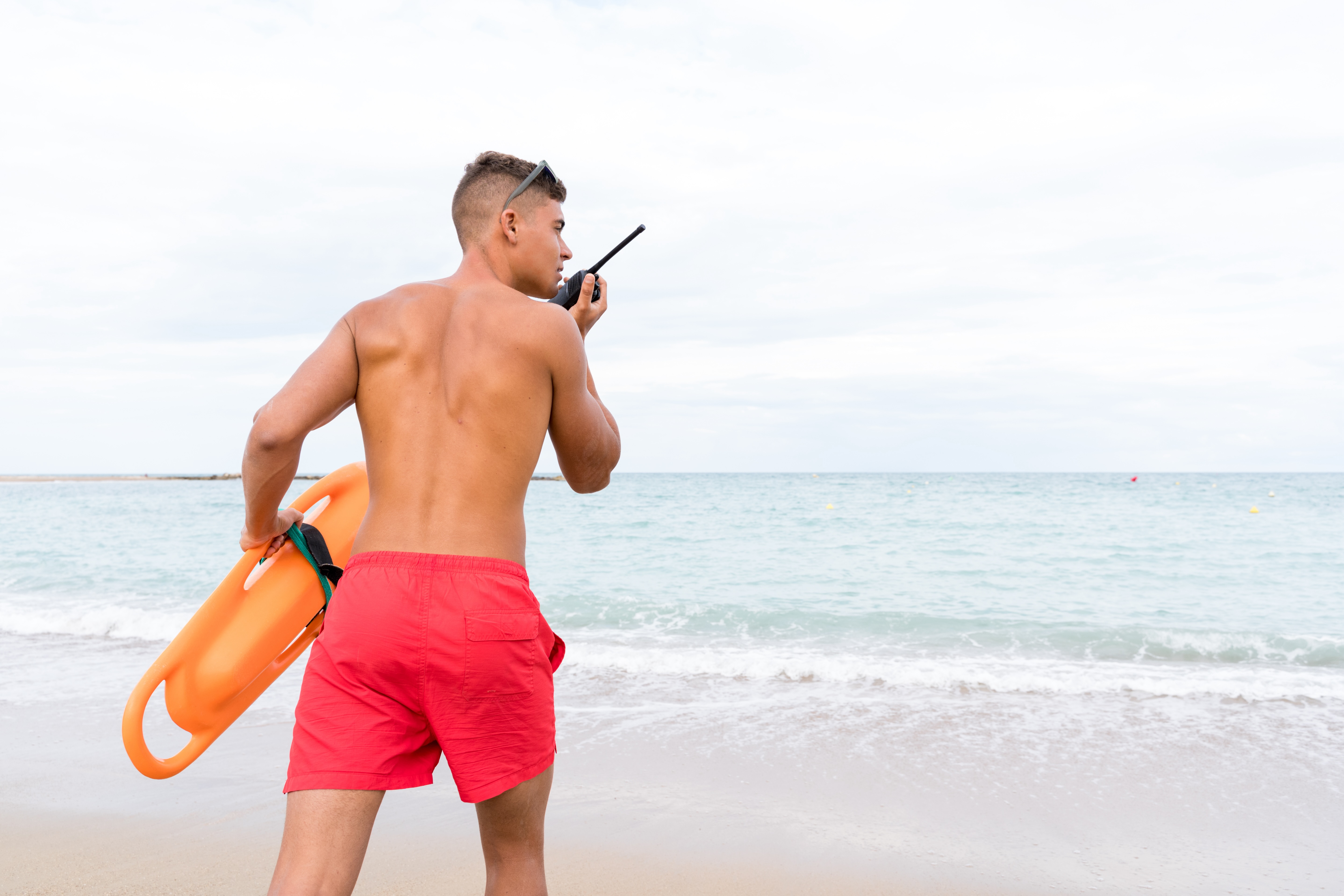
Lifeguarding is one of the most accessible entry points into a water-based career — and one of the most important roles in any aquatic environment. From pool-side positions at leisure centres and holiday resorts to open water beach lifeguarding on exposed coastlines, qualified lifeguards are in consistent demand year-round, with particularly strong seasonal hiring across Europe, the US, Australia, and the Caribbean.
Whether you're looking for a summer job, a stepping stone into a wider maritime or watersports career, or a long-term profession in aquatic safety, this guide covers everything you need to know.
What Does a Lifeguard Do?
Lifeguards are responsible for the safety of swimmers and water users in their designated area. The role varies significantly depending on the environment:
Pool lifeguards monitor swimmers in controlled indoor or outdoor pool environments, enforce safety rules, respond to incidents, and carry out regular pool checks and water quality monitoring.
Beach lifeguards operate in open water environments — managing beach flags, monitoring sea conditions, identifying rip currents and hazards, and responding to incidents across an often large and unpredictable area. Beach lifeguarding is significantly more demanding than pool work and typically requires additional specialist training.
Waterpark lifeguards manage specific attractions and rides, responding to incidents on slides, wave pools, and lazy rivers in high-throughput environments.
Aquatic centre and leisure facility lifeguards combine pool supervision with first response responsibilities, facility checks, and sometimes programming support for swimming lessons and activities.
All lifeguarding roles share a common core: constant vigilance, sound emergency response, and the ability to act decisively under pressure.
Step 1: Check the Age and Fitness Requirements
Age requirements
Most lifeguard certification programmes require candidates to be at least 15–16 years old. Some beach lifeguard programmes have higher minimum ages — typically 16 or 17 — due to the more demanding physical and decision-making requirements of open water environments. Check the specific requirements of your chosen certification programme and employer.
Swimming ability
Strong swimming is non-negotiable. Before enrolling in any lifeguard course, you will need to pass a swimming prerequisite test. Typical requirements include:
Swimming a set distance (commonly 200–400m) continuously without stopping
Completing the distance within a specified time
Demonstrating competence across multiple strokes (front crawl, breaststroke minimum)
Treading water for a set period
Surface diving to retrieve an object from the pool floor
Specific requirements vary by programme — always check before enrolment. If your swimming is not currently at this standard, invest time in training before attempting to enrol.
Step 2: Choose Your Certification Path
The right certification depends on where you plan to work. The major certifying bodies differ by country and environment.
UK
RLSS UK (Royal Life Saving Society UK) The RLSS National Pool Lifeguard Qualification (NPLQ) is the standard certification for pool lifeguarding in the UK, accepted at the vast majority of leisure centres, hotels, and aquatic facilities. A 36-hour course typically completed over a weekend plus additional sessions.
RLSS UK Beach Lifeguard Award For open water and beach lifeguarding in the UK. More demanding than the NPLQ and includes surf, rip current, and open water rescue components.
RNLI Lifeguard Programme The RNLI runs the beach lifeguard service on many UK beaches. Their own training programme is required for RNLI-employed lifeguards and is highly regarded within the industry.
USA
American Red Cross Lifeguard Certification The most widely accepted pool and waterfront lifeguard certification in the US. Covers water rescue, CPR, AED, and first aid. Available through Red Cross training centres nationwide.
YMCA Lifeguard Certification Accepted across YMCA facilities and many other aquatic employers in the US.
Ellis & Associates (Jeff Ellis Management) The certification standard for many US waterparks and commercial aquatic facilities.
United States Lifesaving Association (USLA) The governing body for open water and ocean lifeguarding in the US. USLA certification is the standard for beach lifeguard positions at American coastal and lake destinations.
Australia
Surf Life Saving Australia (SLSA) The governing body for surf lifesaving in Australia. SLSA Bronze Medallion is the entry-level qualification for beach lifeguarding, covering surf rescue, CPR, and patrol operations. Required for lifeguards operating on patrolled Australian beaches.
Europe (outside UK)
Many European countries have national lifeguard certification frameworks — ILS (International Life Saving Federation) member organisations in each country provide the locally recognised qualifications. For working at international resorts and holiday centres, RLSS UK qualifications are often accepted alongside local equivalents.
Step 3: Complete Your Lifeguard Training Course
Lifeguard training covers a core set of competencies regardless of the certifying body. Here is what to expect:
Water rescue techniques:
Recognising a swimmer in distress
Entry techniques (stride entry, compact jump, shallow water entry)
Active and passive victim rescues
Multiple victim scenarios
Spinal injury management in the water
CPR and AED:
Adult, child, and infant CPR
Two-rescuer CPR
AED (Automated External Defibrillator) operation
Recovery position and airway management
First aid:
Bleeding control and wound management
Fractures, dislocations, and spinal injuries
Heat-related illness and hypothermia
Suspected drowning aftercare
Surveillance and prevention:
Scanning techniques and zones of responsibility
Hazard identification and risk assessment
Enforcing rules and managing patron behaviour
Communication with co-lifeguards and emergency services
Practical and written assessments:
All programmes conclude with practical rescue scenarios and a written examination
You must pass both elements to receive certification
Step 4: Obtain CPR and First Aid Certification
Most lifeguard courses include CPR and first aid training as an integrated component. If yours does not, or if your current certifications are approaching expiry, ensure you hold:
CPR/AED certification (current — typically valid 1–2 years depending on provider)
First aid certification appropriate to your work environment
For beach and open water roles, an outdoor or remote first aid qualification is a significant advantage and required by some employers.
Step 5: Pass Your Assessment
Lifeguard assessments are both practical and written. Do not underestimate either component.
Practical assessment typically involves:
Timed swim test under examination conditions
Rescue scenarios with trained victim actors
CPR and AED demonstration
Spinal management scenario
Equipment handling (rescue tube, board, spine board depending on environment)
Written examination covers:
Recognition and surveillance principles
Emergency action plans and procedures
Legal responsibilities and duty of care
Aquatic environment knowledge
Arrive at assessment well-rested, having practiced your skills in training. The scenarios are designed to replicate real incidents — slow, hesitant responses in the practical component are the most common reason for failure.
Step 6: Gain Your First Lifeguarding Experience
Certification opens the door — working in a real aquatic environment builds the situational awareness, authority, and pattern recognition that makes an effective lifeguard.
Where to find first lifeguarding positions:
Local authority leisure centres and swimming pools
Holiday parks and resort pools
Hotels with aquatic facilities
Outdoor lidos and open water swimming venues
Summer camps with waterfront programmes
Coastal local authorities recruiting beach lifeguards seasonally
Browse lifeguard jobs on BoatyJobs →
In the UK, seasonal beach lifeguard positions are recruited by local councils, the RNLI, and private contractors from January through April for summer deployment. Many positions are filled early — apply as soon as recruitment opens.
Internationally, lifeguard positions at Mediterranean resorts, Caribbean hotels, and Australian beaches offer strong seasonal packages often including accommodation and flights for experienced candidates.
Step 7: Develop Specialist Skills and Additional Qualifications
Additional qualifications significantly increase your employability — particularly for progression into beach lifeguarding, aquatic management, or international resort roles.
Beach lifeguard qualification (RLSS UK Beach Award, USLA, SLSA Bronze Medallion) — essential for any open water or coastal role
Surf lifesaving qualification — for working on surf beaches; includes paddleboard and surf ski rescue skills
Spinal management in water — specialist training for managing suspected spinal injuries
Oxygen administration — required or preferred by many employers, particularly for beach roles
Lifeguard trainer / assessor — for experienced lifeguards looking to develop and deliver training programmes
Pool plant operator qualification — for pool-based roles with plant room responsibilities
IQL / NPLQ Trainer (UK) — allows you to train and assess other lifeguards; significantly increases value to an employer
Aquatic rescue with boat or PWC — for beach and open water environments where powered craft are used in rescue operations
Step 8: Keep Your Certification Current
Lifeguard certifications expire — typically every two years in the UK and US — and an expired certification means you cannot legally work as a lifeguard at most facilities.
Staying current requires:
Booking and completing recertification before your current certificate expires
Keeping CPR and first aid certifications in date (often on separate renewal cycles)
Attending any in-service training required by your employer
Maintaining your swimming fitness throughout the year — don't let your physical standard drift between seasons
Many employers run in-house revalidation training for retained staff. If you're working seasonally, take personal responsibility for tracking your own renewal dates.
How Long Does It Take to Become a Lifeguard?
The initial certification process is one of the fastest in the aquatic industry.
Route Typical timeline Pool lifeguard (NPLQ or equivalent) 1–2 weekends (36 hours) Beach lifeguard (RLSS UK Beach Award) 3–5 days SLSA Bronze Medallion (Australia) 2–4 weekends American Red Cross certification (USA) 25–30 hours over several days
The prerequisite swim training is often the limiting factor — if you need to improve your swimming to meet the entry standard, allow 4–12 weeks depending on your starting level.
How Much Do Lifeguards Earn?
Earnings vary significantly by location, environment, and experience level.
UK:
Pool lifeguard: £11–£14/hour (National Living Wage to above in major cities)
Beach lifeguard (seasonal): £12–£18/hour
Senior lifeguard / duty manager: £22,000–£32,000/year
USA:
Pool lifeguard: $13–$20/hour depending on state and employer
Beach lifeguard: $16–$28/hour (varies significantly by location; LA County and New York City beach lifeguards are among the best-paid in the country)
Head lifeguard / aquatic supervisor: $40,000–$60,000+/year
International resort roles:
Mediterranean / Caribbean resort: €1,500–€2,500/month + accommodation and meals
Australian beach lifeguard (SLSA seasonal): AUD $25–$35/hour
Frequently Asked Questions
Which lifeguard certification is best? It depends entirely on where you plan to work. In the UK, the RLSS NPLQ is the standard for pools; the RLSS Beach Lifeguard Award for open water. In the US, American Red Cross is the most widely accepted. In Australia, SLSA Bronze Medallion is required for beach work. Always match your certification to your target employer and environment.
Can I work as a lifeguard abroad with a UK qualification? UK RLSS qualifications are accepted at many international resorts and holiday facilities, particularly those operating under UK or European standards. However, some countries require local equivalency or a top-up qualification. Always check with your specific employer before relocating.
Is lifeguarding a good entry point into a watersports or maritime career? Yes — it is one of the best. Lifeguarding builds water confidence, emergency response skills, and a professional track record that is directly relevant to sailing instructor, dive instructor, and maritime roles. Many people working in professional watersports started their careers as lifeguards.
Do I need to be an elite swimmer to become a lifeguard? No. The swimming requirement is about functional competence — the ability to swim distances required for rescue and to maintain stamina throughout a shift. You do not need to be a competitive swimmer. A consistent, efficient breaststroke and front crawl across 200–400m is what most programmes require.
What is the difference between a pool lifeguard and a beach lifeguard? Pool lifeguarding involves supervising a controlled, defined environment with predictable hazards. Beach lifeguarding involves open water, surf, rip currents, changing weather, and a far larger and more dynamic area of responsibility. Beach lifeguarding requires additional specialist training and is generally considered the more demanding of the two disciplines — and commands higher pay accordingly.
Ready to Find a Lifeguard Job?
BoatyJobs lists lifeguard vacancies across the UK, Europe, and globally — from pool positions at leisure centres and hotels to seasonal beach lifeguard roles at coastal and resort destinations.